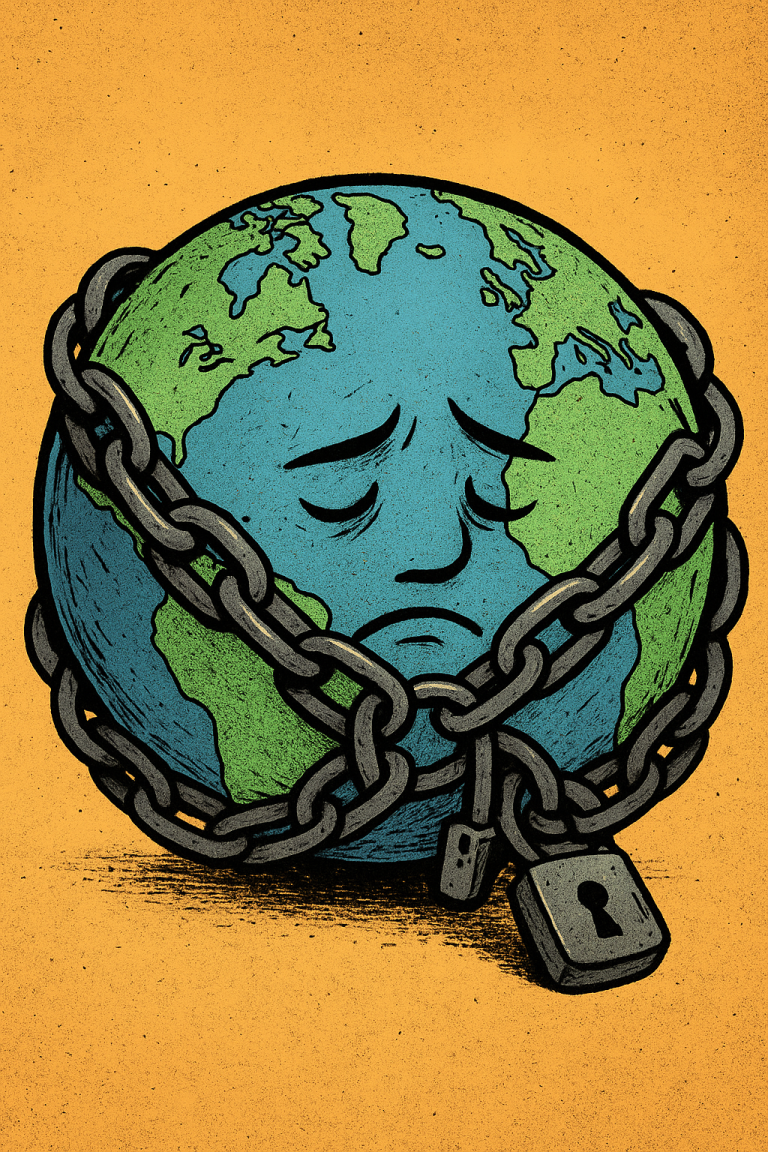
Aldous Huxley’s Brave New World (1932) is one of the most thought-provoking dystopian novels of the 20th century, offering a chilling vision of a future where human beings are conditioned from birth to accept their place in a rigidly controlled society. While Aldous Huxley crafted the novel, his brother, Julian Huxley, played a crucial role in shaping the intellectual landscape that paralleled many of its themes. Julian Huxley, a biologist and evolutionary theorist, was a leading advocate of transhumanism, a movement that seeks to enhance human capabilities through science and technology. When examined through the lens of Julian’s philosophy, Brave New World becomes not only a cautionary tale but also an exploration of the potential consequences of human enhancement.
The World of Brave New World: A Controlled Utopia
In Brave New World, Aldous Huxley presents a society where technological advancements and psychological conditioning have eliminated suffering, conflict, and individuality. The World State, governed by ten World Controllers, has replaced natural reproduction with artificial wombs and social engineering. Citizens are divided into castes—Alphas, Betas, Gammas, Deltas, and Epsilons—each programmed for specific societal roles. The novel critiques a world where genetic manipulation and biochemical control, including the widespread use of the happiness-inducing drug Soma, have created a population devoid of free will and genuine emotional depth.
The novel questions the price of stability and technological progress, raising concerns about whether a world without pain or struggle is truly desirable. This vision of an engineered society, while horrifying to some, shares striking similarities with Julian Huxley’s views on the future of humanity.
Julian Huxley and Transhumanism: A Brave New Future?

Julian Huxley (1887–1975) was a visionary scientist who coined the term “transhumanism,” envisioning a future in which humanity could transcend its biological limitations through science. He believed that human evolution should not stop at natural selection but should be guided by intelligence, reason, and technological intervention. His ideas promoted genetic engineering, eugenics, and the use of science to improve mental and physical abilities.
While Julian Huxley was optimistic about human progress, Brave New World serves as a counterpoint, warning of the dangers of manipulating human nature. The novel demonstrates how a society that prioritizes stability and efficiency over freedom and individuality can lead to a loss of true humanity. Unlike Julian’s utopian vision, Aldous’ dystopian world presents genetic engineering as a tool of oppression rather than empowerment.
Genetic Engineering and Social Control
One of the most striking similarities between Julian Huxley’s transhumanist ideals and Brave New World is the concept of genetic engineering. In the novel, the Bokanovsky Process allows the mass production of identical humans, creating a workforce that is both highly efficient and deeply stratified. This mirrors Julian Huxley’s belief in using genetics to improve the human race, though his vision was aimed at self-improvement rather than totalitarian control.
Julian’s advocacy for eugenics—especially in the early 20th century—suggested that society could selectively breed desirable traits to create a better future. However, Brave New World illustrates the dark side of such thinking, where individuality is sacrificed for a homogenized population. The genetic determinism in the novel strips individuals of personal choice, forcing them into predetermined societal roles. This raises ethical questions about how far science should go in shaping human destiny.
The Role of Pleasure and Control
Both Julian Huxley and Brave New World explore the role of pleasure in shaping society. The novel’s citizens are pacified through instant gratification, with Soma serving as a chemical escape from any discomfort. The absence of suffering creates a passive, complacent population that never questions authority.
Julian Huxley, though advocating for human enhancement, recognized that the pursuit of happiness alone could not define progress. He believed in an “evolutionary humanism,” where intellectual and ethical growth would accompany technological advancements. However, Brave New World presents a world where pleasure is weaponized as a tool of control, preventing critical thought and meaningful change.
Technology, Freedom, and the Human Spirit
The contrast between Julian’s and Aldous’ perspectives highlights a fundamental debate: Can technological progress truly coexist with individual freedom? Julian Huxley’s transhumanism suggests that science can liberate humanity from its biological limitations, leading to a new era of enlightenment. In contrast, Brave New World warns that unchecked scientific power can strip people of their autonomy, reducing them to mere cogs in a vast machine.
Aldous Huxley later revisited these themes in his essays and lectures, acknowledging that some aspects of Brave New World were becoming reality. The rise of consumer culture, mass entertainment, and pharmaceutical solutions to emotional distress reflected elements of the novel’s dystopian vision. In contrast, Julian Huxley remained hopeful that humanity could harness science for good, steering evolution toward greater heights.
Conclusion: Lessons for the Future
The tension between Brave New World and Julian Huxley’s transhumanism remains relevant today. As we advance in genetic engineering, artificial intelligence, and neuroscience, we must grapple with ethical questions about human identity and freedom. Will we use technology to enhance our potential, or will we surrender autonomy in exchange for comfort and stability?
Aldous Huxley’s novel serves as a warning against the blind pursuit of progress without ethical considerations, while Julian Huxley’s vision of transhumanism challenges us to think about how we can responsibly shape our own evolution. The intersection of these ideas forces us to ask: What kind of future do we truly want? Will we build a world of empowered individuals, or will we become passive recipients of technological determinism?
In the end, Brave New World and Julian Huxley’s transhumanism offer two sides of the same coin—one a dystopian nightmare, the other a utopian dream. The challenge for our generation is to find a path that preserves both progress and human dignity, ensuring that the future remains one of possibility rather than control.
About The Author